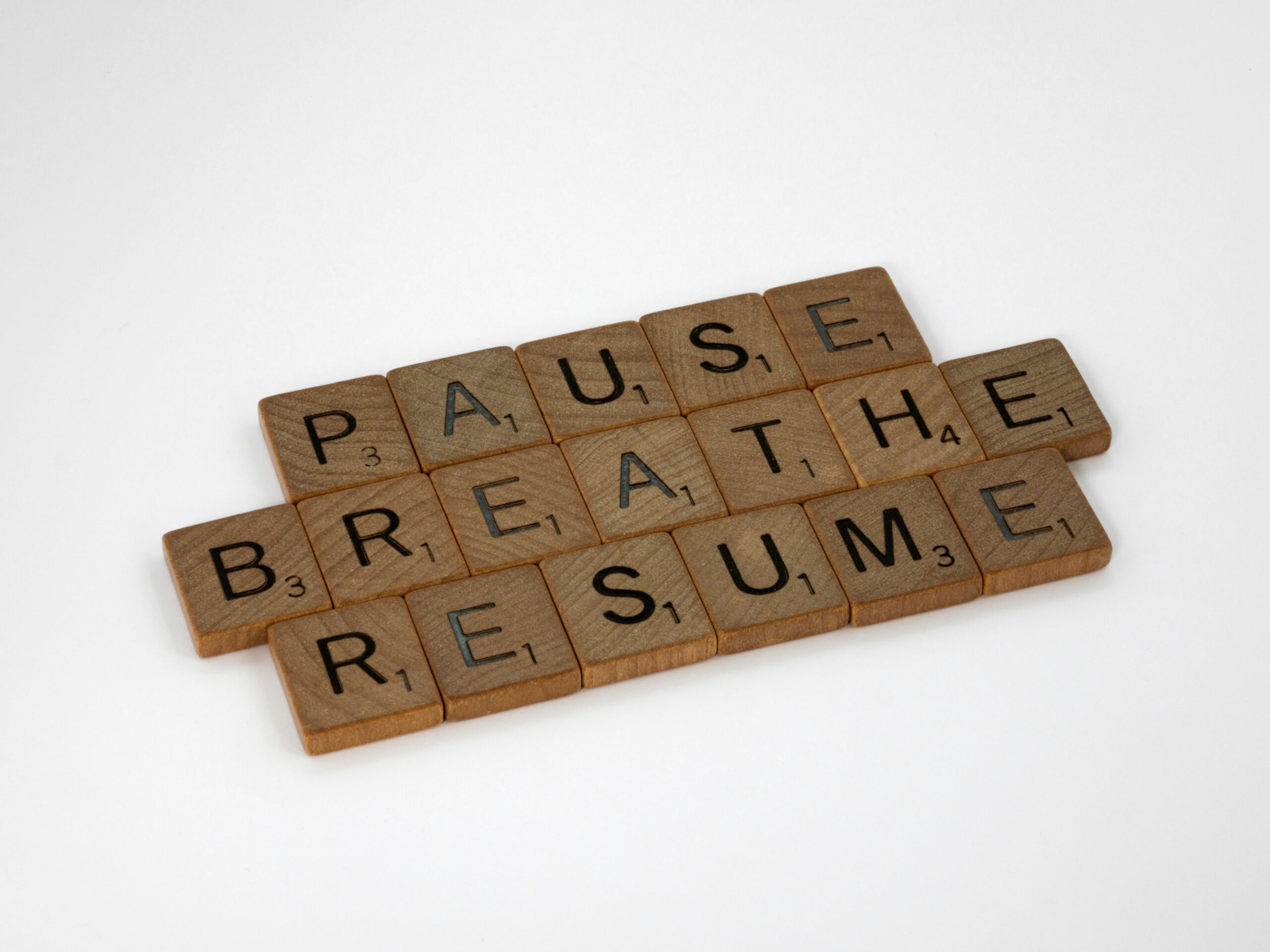
Learning how to pause literary style
In Pride and Prejudice, Elizabeth Bennet misreads Mr. Darcy with a weighty confidence only clever people can carry. One overheard line at a ball, one stiff sentence in a parlor, and the story writes itself. Then a letter arrives—spare, factual, with a human pulse under the ink—and everything tilts. The facts do not change; the frame does. Austen does not need thunder. She uses a pause. A held breath between offense and reply. A short interval where pride loosens its grip and attention returns to what is actually there.
I watch this same sport of pause rescue partnerships. A CEO reads a board email as a threat. A product lead hears a finance question as contempt. A sales head takes a technical “not yet” as a “never.”
Tight bodies, fast stories, and sharp replies. Then someone chooses a brief pause: not a dramatic silence, a practical one. The room exhales. The question is recast. A date is written instead of a diatribe. That pause does not make anyone softer. It makes them more accurate. The pause is not absence of action. This mastery of how to pause is a tool that catches you on the lip of a cliff and turns you back toward a path.
Field vignette for how to pause — The foyer breath
The elevator opens to a carpeted hush. Two founders step out carrying different weather: one crackling with certainty, the other wrapped in careful calm. An investor’s text—“We should regroup”—has turned into a Rorschach. In the small glass foyer, I ask for sixty seconds. We stand with palms on a cool table. Breaths lengthen.
We name what a camera would see: “Text at 8:11. No follow-up. Board meeting tomorrow.” We name one felt line: “I feel cornered.” Then we choose a next step that fits inside the minute: “Let’s ask, ‘Do you mean before or after the deck’ and propose 3:30.” That’s the whole spell. No incense, just oxygen. Back in the room, everyone looks more intelligent—because they are.
What The Pause is and why it works
The Pause is four small moves you can run in under a minute. Stop. Step back. Observe. Proceed mindfully. Executives often distrust anything that looks like ritual. They learn to trust The Pause because it buys back accuracy at high efficiency.
Here’s how to pause broken down into those parts.
Stop. Interrupt the reflex. You can say it out loud—“I’m going to take a moment”—and you will feel the room’s shoulders drop. Stopping does not mean surrendering the floor. It means choosing your next sentence rather than letting your nervous system choose it for you.
Step back. Create a micro-distance. Look at the screen, the window, your notebook. Change posture. Touch the table with both palms. Ground your body so your mind can widen. This is not performance. It is mechanics.
Observe. Name three facts you can verify and one feeling you can recognize without defending. “The client asked for a discount in the room. I felt rushed.” Facts shrink the battlefield. Named feelings defuse the need to smuggle emotion into argument.
Proceed mindfully. Pick the smallest next action that improves the decision. Ask a meaning check. Move the topic to the channel that can carry it. Time-box a test. Write the review date. Mindful here is not spiritual. It is specific.
Clarifier — What “Proceed mindfully” looks like in practice
Mindful actions are concrete, legible, and time-bound.
• Move the conversation up a channel: “Let’s take this live for ten minutes at 3:15.”
• Ask a pin-point question: “When you say ready, do you mean risk cleared or risk contained?”
• Create a reversible step: “Ship to 10% behind a flag, measure churn for 48 hours.”
• Put truth on a clock: “Review Friday 2 pm; I’ll own the write-up.”
If your next move can’t be written in one sentence with a date, it isn’t mindful yet—it’s wishful.
Why it works in bodies as well as rooms
Under threat, the amygdala narrows your field and your prefrontal cortex goes dim. You do not become stupid; you become fast in the wrong direction. Learning how to pause changes this because pausing reverses that drift. The STOP skill—Stop, Take a step back, Observe, Proceed—gives your prefrontal cortex a literal beat to reengage.
When activation runs high, pair STOP with a ninety-second reset: cold water on wrists, a brief stair walk, paced breathing, or a slow exhale count. The TIPP tools—Temperature, Intense movement, Paced breathing, Progressive muscle release—are not wellness theater. They are little levers that put thinking back within reach when the body is still in siren mode. You are not trying to feel better; you are trying to think better.
Leaders worry pauses will read as weakness. But in learning how to pause and practice, they read as caring about the outcome. When the most senior voice normalizes a short pause, less powerful voices stop performing and start contributing. That is not a mood shift. It is a material advantage.
Vignette — The ninety-second detour that saved a board call
A founder’s jaw clenches; the deck is at slide 28; everyone can hear the ice. “Give me ninety seconds to get precise,” she says. Camera off. Breath out longer than in. Cool water on wrists. Back on. “Here’s the smallest true issue: headcount narrative conflicts with runway math. I propose we pick one sentence and test it on slide 8.” The director who had been sharpening his question nods. The call gets calmer. The numbers don’t change; the chemistry does.
Sometimes the system needs a physical reset before clarity returns
Here are some additional tools that help make learning how to pause easier.
If an email or comment landed hot enough to light up your chest, start in the body.
• Temperature shift. Cool water on wrists or the back of the neck. Thirty seconds.
• Intense movement. One minute of stairs or brisk pacing.
• Paced breathing. In for four, hold for two, out for six. Ten rounds.
• Progressive release. Clench hands under the table for five seconds, then soften. Repeat twice.
Pair this with a sentence that keeps dignity intact: “I’m going to take ninety seconds and then respond.” It saves reputations. It saves weeks. It teaches the room that accuracy is a shared value, not a personality quirk.
Mini-protocol — The visible leader shows how to pause
- “I’m going to take a moment, then come back with one sentence we can all act on.”
- Run one TIPP action (quietly).
- Return with the camera-ready line: “Here’s the part I can verify; here’s the smallest next step.”
People copy what they can see. When showing others how to pause, make steadiness visible.
Curiosity instead of judgment
Judgment promises efficiency. It turns uncertainty into a quick story: “They’re sandbagging.” “She’s grandstanding.” “He doesn’t get it.” The thrill and satisfaction this brings is real. So is the cost. Judgment narrows curiosity to a pinhole and converts partners into caricatures. Curiosity does the opposite. It widens the frame just enough to gather data before you cut to action.
In a media company I served, a COO read the editor’s caution as artistic vanity. The editor read the COO’s push for a date as commercial cynicism. Each was wrong by twenty degrees. A pause plus a single curious question—“What problem are you trying to solve with that ask?”—revealed the truth: the COO was protecting distribution windows; the editor was protecting a source. The plan changed in two sentences. Both reputations improved in the room because someone chose curiosity over the adrenaline of judgment.
Sidebar — Curiosity is not capitulation
Curiosity does not mean you agree. It means you are collecting enough truth to choose wisely. You can be curious and firm in the same breath: “Help me see what you’re guarding; then I’ll tell you what I’m unwilling to trade.” You preserve dignity and you reduce expensive corrections later.
Swaps you can use without sounding like a spreadsheet
Replace “Why did you…” with “What were you optimizing for when you…”
Replace “Obviously we can’t…” with “What would have to be true for us to…”
Replace “You always…” with “The first time this bit us last week was…”
Replace “Calm down” with “Do you want to respond now or after a short reset?”
These are not scripts. They are handles. The hand that reaches for one looks different to the receiver. It looks like a partner.
A few more that travel
• “I’m guessing you’re protecting X; is that right?”
• “If we label this reversible for two weeks, what becomes easier?”
• “Tell me the risk you want me to own if we do it your way; I’ll tell you mine if we do it mine.”
Judgment closes, curiosity opens
Judgment is a fast ladder. You select a sliver of data, add meaning from memory, leap to a conclusion, and kick away the rungs. After learning how to pause, curiosity walks you back down. “Here’s my conclusion in a sentence. Here’s the data I picked. Here’s the meaning I added. What am I missing?” You can say this aloud in a boardroom without losing face. Adults recognize the discipline. They copy it.
One founder told me, “Curiosity feels slow.” We tested it. We tracked time from opening to decision for six weeks. Meetings with a visible curiosity move at the top—one clarifying question, one ladder walk-down—ended eleven minutes sooner on average and produced fewer hallway do-overs. Curiosity saved time by preventing repairs. These are efficiencies we gain when we learn how to pause.
Reflective listening that doesn’t sound scripted
Mirroring is not parroting. It is a short proof of comprehension delivered in plain speech. One sentence for content. One piece of logic you can validate from their seat. One empathy line asked as a question. Then a consent check to offer your view.
Once you’ve established how to pause and practiced reflective listening, you can do this in under a minute:
Mirror: “You’re saying the platform’s note signals pacing risk in episode three, and you want us to revisit the spine so retention holds. Did I get that?”
Validate: “That makes sense—if the watch curve dips there, the season underperforms and we lose leverage.”
Empathize: “I imagine that feels urgent with a public delivery window—close?”
Consent check: “Would you like to hear the counter-risk I’m watching?”
Adults relax when they recognize themselves in your reflection. They do not need agreement. They need the dignity of accuracy.
Style notes
• Mirror actions and stakes, not adjectives.
• Validation = one understandable piece of logic, not surrender.
• Empathy is a guess, with a question mark, not a diagnosis.
A field correction
Over-mirroring sounds like theater. Keep it short. Do not mirror adjectives (“reckless,” “brilliant”); mirror actions and stakes. Validation is not capitulation; it is perspective-taking on a single point. Empathy is one sentence, tentative, and it ends with a question mark.
Practice in the wild — 60-second audit
After a hot exchange, jot the three lines you actually said. If you can’t find a mirror, a validation, or a consent check, add one to your next sentence. Small edits change weather.
When words can cause trouble
Teams often argue inside words. “Conservative,” “ready,” “safe,” “quality,” “pilot”—small terms carrying different freight for different people. Under pressure, those differences harden and masquerade as principle. A meaning check is a one-line question that reduces wobble without drama.
“When you say dial it back, do you mean tone, scope, or the whole idea?”
“When you say conservative, do you mean spend, public profile, or technical risk?”
“When you say ready, do you mean risk cleared or risk contained?”
“When you say pilot, do you mean a reversible test in production or a lab-only sim?”
Write a team dictionary for ten hot words each quarter. Pin it to agendas. Ask one meaning check at the top of any heavy topic. The page will be dull on purpose and will save you a quarter of your preventable fights.
Glossary moment on the agenda (ninety seconds)
At the top of big meetings: “Today’s red words are ready, conservative, lock. Let’s define each in one line.” Write them where eyes can land. Use them out loud.
Meaning-check bank you can post this week
Use these as starters. Express these ideas in your own way.
• “By ‘quality,’ are we talking about durability in the field, customer perception, or compliance thresholds?”
• “When you say ‘fast,’ do you mean calendar efficiency, decision efficiency, or learning efficiency?”
• “‘Safer’—less reputational risk, fewer operational pages, or lower legal exposure?”
• “Does ‘lock’ mean no changes or a check required for any change?”
• “‘Ready’ today—feature complete, tested on canary, or safe enough to learn?”
When you establish how to pause, you’re not litigating words but preventing plot holes.
Exercises you can run this month
Ten-minute mirror
Purpose. Build reliable accuracy when heat rises.
How. Choose a live issue. Partner A speaks for two minutes in short chunks. Partner B mirrors once (content, logic you validate, one empathy guess), then asks “Did I get that?” Switch roles. End with one small decision, owner, and review date.
Watch for. The urge to defend while mirroring. Resist it. The urge to fix before the mirror lands. Wait.
Ladder audit
Purpose. Catch faulty leaps before they harden.
How. Write your conclusion at the top of a page. List the data you selected. Circle data you ignored. Write the meaning you added. Share how to pause with your partner. Trade one correction each.
Watch for. Data cherry-picking that flatters your function.
Channel triage
Purpose. Match medium to ambiguity and emotion.
How. Publish a one-page rule set: text/chat for logistics; email for status and recap with the decision needed in the first line; live voice or room for feedback, conflict, hiring, money, and any message that tightened your chest. Run it for thirty days.
Watch for. Hot threads lingering in chat. Bump them up.
Pause drill
Purpose. Make STOP reflexive.
How. Set two calendar pings at predictable stress times. When it pings: Stop. Step back. Observe three facts and one feeling. Proceed with the smallest useful action. If activation is high, use one TIPP tool. It’s key for establishing how to pause.
Watch for. How often your next sentence changes after ninety seconds.
Listening tour
Purpose. Surface risk early and widen empathy.
How. Each partner books three fifteen-minute meetings in other departments. Ask for two wins and two worries. Mirror, validate, empathize. Close the loop in forty-eight hours with one next step you can own.
Watch for. The difference in tone when people see their words travel.
Micro-review habit (add-on)
Purpose. Turn pauses into artifacts.
How. After any hot decision, write one two-line note: definition used, review date. Paste it in the channel. You’re teaching the room to trust follow-through. These are the shared benefits after learning how to pause.
Definitions for Chapter Two: How to Pause
The Pause. A visible choice to slow reflex so intention can enter. How to pause in four steps: Stop, Step back, Observe, Proceed mindfully. You use it when your jaw sets, when your reply wants to sprint, or when a word begins to wobble the room. Establishing how to pause is not retreat. It is a pit stop that keeps the car in the race.
Why it matters: It restores precision under pressure and models a norm others can copy.
STOP skill. A four-step reset that makes steadiness legible: Stop, Take a step back, Observe internal and external signals, Proceed with intention. It is leadership hygiene in tense rooms. Crucial tools for establishing how to pause.
How to spot it: You’ll hear “One moment” followed by a cleaner, shorter sentence.
TIPP reset. A short, body-first downshift—Temperature change, Intense movement, Paced breathing, Progressive relaxation—used when logic is present but unusable because the body is in alarm. You are not soothing; you are restoring access to judgment.
Tip: Pair it with a calendar cue: big reviews, investor days, launch weeks.
Reflective listening. A compact, plain-English mirror: one sentence for content, one validation of logic from the other person’s seat, one tentative empathy line, then a consent check. Its purpose is not agreement; it is recognized accuracy that lowers defensiveness. Learning how to pause helps make this more possible.
Result to expect: The next sentence in the room gets smarter and shorter.
Meaning check. A one-line question that clarifies a loaded term before you debate it. It prevents the fight where both sides defend different definitions of the same word.
Use it when: You hear ready, safe, conservative, quality, pilot, or any word that can wear three hats.
Channel triage. A simple rule set that matches message to medium: the more ambiguity or emotion, the richer the channel. It is how you reduce rework born of thin media carrying heavy content. Listen to your body when learning how to pause.
Rule of thumb: If your chest tightens while typing, upgrade the medium.
Ladder of inference. The mental rungs we climb from data to meaning to conclusion to action. Walking down the ladder—naming data and meanings explicitly—keeps efficiency from turning into confident error. Establishing how to pause can help provide time to climb this ladder in our minds.
Quick version: “Conclusion, data I picked, meaning I added, what I might be missing.”
Clean commit. A two-sentence, in-writing promise that follows a decision you will carry professionally, even if it wasn’t your first choice. It includes what you will do and by when, and it travels the same day.
Why it works: It stops hallway reopenings; it teaches reliability.
Takeaways you can carry
• A sixty- to ninety-second pause is not indulgence. It is the cheapest way to buy back accuracy.
• Curiosity is faster than judgment over the full arc of a decision. It lowers rework and the cost of repair.
• Mirroring is not therapy; it is professional verification. One sentence of accurate reflection often saves a meeting.
• Words wobble. Define your hot terms in writing. Post the page. Use it.
• Match medium to the weight of the message. If your chest tightens, bump the channel.
• Walk down your ladder once before you act. This is a critical part of establishing how to pause. Name your data and the meaning you added.
• End hard conversations with a clean commit, an owner, and a review date. efficiency is not just deciding; it is carrying.
Literary reflection
Austen understood that a letter could turn a life because it delivered facts with dignity and gave pride a place to rest. Thoreau prized the unhurried glance—the kind that lets the mind catch up to the mouth. Dickinson, master of the small form, trusted a few exact lines to carry weather. What you are learning here is not different. The Pause is your letter. The mirror is your exact line. The meaning check is your unhurried glance. Use them not to go gentle, but to go true. When the room sees you choose accuracy over adrenaline, it will begin to do the same. And the work—stubborn, public, expensive—will move because people can hear one another again.